
 par
par ARCHIVES : Articles by Marie-Agnès Bruneau Published in the International Press
Published in REALSCREEN, June 26, 2025
At its Sunny Side of the Doc lineup presentation on Tuesday (June 25), pay-TV group Canal+ enthusiastically showcased the trailers for its first three AI-driven history documentaries, which are set to be delivered between now and the end of the year.
According to Canal+, renewing the approach to documentary narrative and form is a priority, and AI is now a part of the process. The three projects featured in its session are destined for the group’s history channel Planète+, “which is a good place for experimentation,” said the group’s director of documentaries Christine Cauquelin.
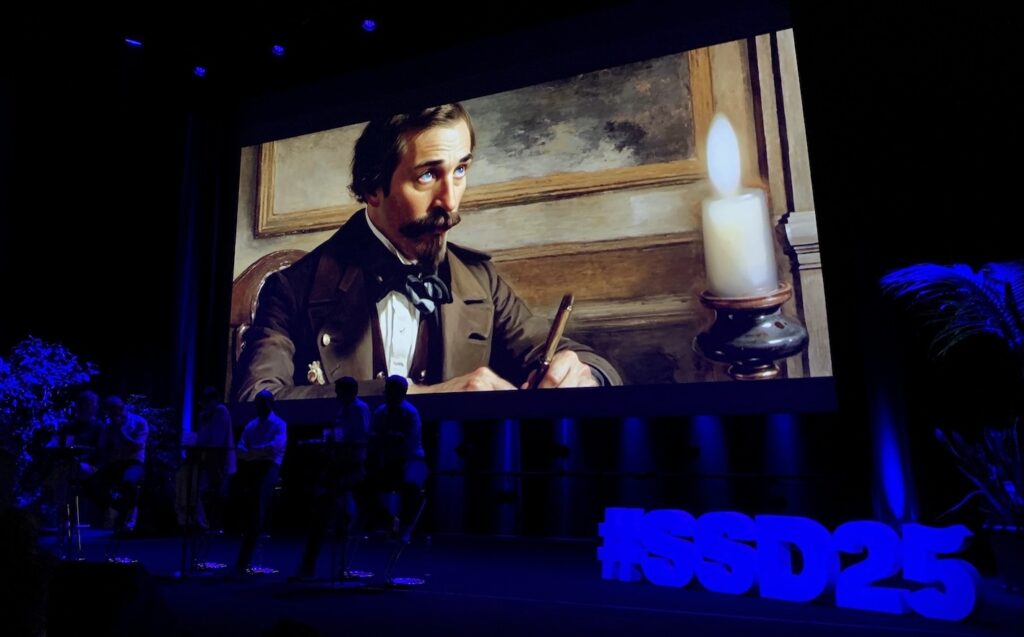
Announced as being in the works last year, Napoleon III: le prix de l’audace (Napoleon III: The Price of Boldness) has delivered its two first episodes, which have not yet aired. Produced by Bonne Pioche (part of the Federation group), this 4 x 52-minute docudrama is set in one of the mid-19th century’s early press rooms, and follows reporters (played by real actors) as they cover the events of the era. These events are illustrated using animated 19th-century paintings and engravings, with generative AI comprising 60% of the documentary.
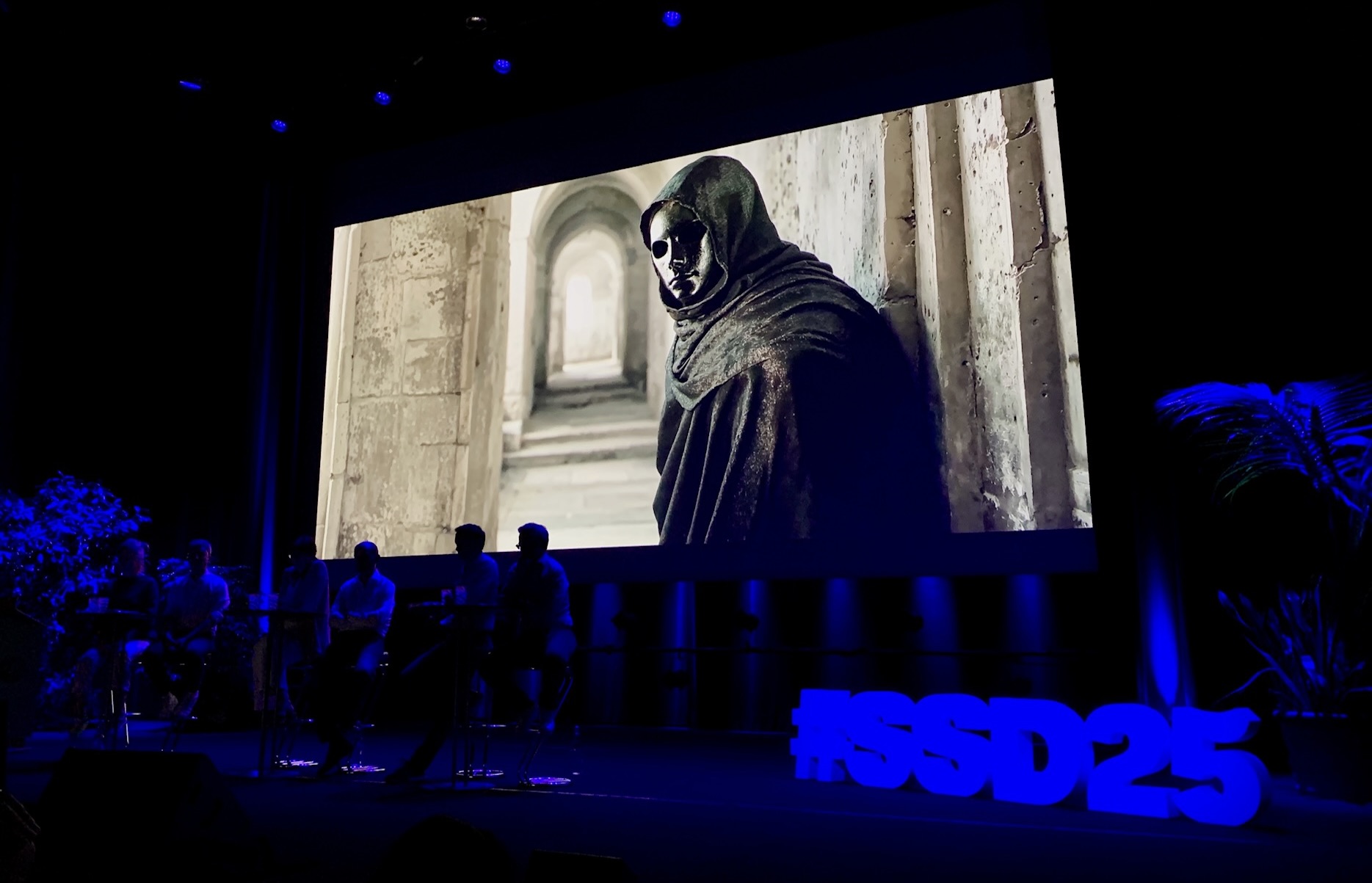
Another AI project in production is Le masque de fer, l’énigme du roi soleil (The Iron Mask: The Sun King’s Enigma), about the famous prisoner disguised in an iron mask who was confined during the reign of Louis XIV, and whose identity remains a mystery. The 4 x 30-minute miniseries, produced by Ah! Productions (part of the Satisfaction group), will use full AI for its re-enactments, “but based on a lot of upstream research,” says Planète+ editorial director Benoit Illes.
The third project is On a volé la joconde (Someone Stole the Joconde), in which AI will have a lighter role, to be used to make the Mona Lisa talk.
“AI is still a work in progress,” Christine Cauquelin tells Realscreen. She says the group is exploring the technology step by step, with these three AI shows the only ones underway at the moment.
Like other broadcasters, Canal+ has also published some guidelines for the use of AI. Cauquelin and Illes point to transparency when it comes to framing AI as archive material, and taking care to feed the AI with accurate and “clean” (copyright-cleared) material. “We want to use AI to tell a more accurate truth,” adds Cauquelin.
Also, AI is not necessarily a quick fix. It requires editing work even after an image is created, and because the technology is constantly evolving, you sometimes need to redo early work. That’s because the tech might have changed significantly by the time you finish your documentary.
AI has been making progress in documentaries, but not as fast as predicted. Canal+’s eager embrace of AI-powered factual programming is somewhat contrasted by the public broadcasting approach to incorporating the tech into content production. At an earlier Sunny Side of the Doc session, some of the public broadcasters from the international copro alliance Global Doc dove into the topic. However, this session focused more on what they aren’t doing, highlighting how cautious they are about the technology.
“We now receive more and more treatments done with AI, but they include no emotion, and emotion is what we need,” Caroline Behar (pictured second from left), France Télévisions’ director of international coproductions and acquisitions, stated.
“The questions are: How do we seize the AI opportunity to fuel our desire for innovation, but what are the boundaries?” she asked, addressing the issues of veracity, transparency, and environmental responsibility.
Last year, the Global Doc call for projects specifically required submissions to incorporate the latest technological developments. One of the three winning projects came from Gedeon Programmes, focusing on the Alexandria Lighthouse. This documentary follows the Centre d’Etudes Alexandrines and Fondation Dassault Systèmes’ Pharos mission, which aims for the virtual reconstruction of the lighthouse, one of the Seven Wonders of the World.
AI plays a central role in the scientific research for this project, enabling the identification of stones and calculating their precise placement to recreate the lighthouse. However, it’s not used in the production of the documentary itself, and the prodco has decided that it won’t be used for re-enactments. As Gedeon’s head Stéphane Milliere explained, “Especially when you work with scientists, everything is in the details.”
Another France Télévisions project, about the construction of Paris, will use AI as one tool among others, primarily for some backgrounds, in order to be faster and more spectacular.
For her part, Stephanie Carter, executive producer at Thirteen Productions for WNET, stated that the pubcaster is adopting a “wait-and-see” approach, partly due to trust issues.
That sentiment was echoed by Mikael Österby, head of SVT Factual International, who mentioned that the Swedish broadcaster is developing AI internally. “We need to embrace it,” he said, “but we also need to find a balance with trust, because trust is our main asset.”
