 par
par ARCHIVES : Articles by Marie-Agnès Bruneau Published in the International Press
C21media – 30 October, 2019
The French government is set to bring VoD within its media regulations while also relaxing the rules for broadcasters to help them fight back. The name of the game is now content rights. Marie-Agnès Bruneau reports.
In September, the French government finally unveiled its long-awaited broadcast reforms, which revisit the rules in light of 21st century digital developments and imposes local production quotas on streaming platforms.
It is the first country to look to implement the European Union’s Audiovisual Media Service Directive, which enables each member state to introduce local production quotas and make VoD platforms contribute to their local funding scheme. In addition, it requires that on-demand services carry at least 30% European content.
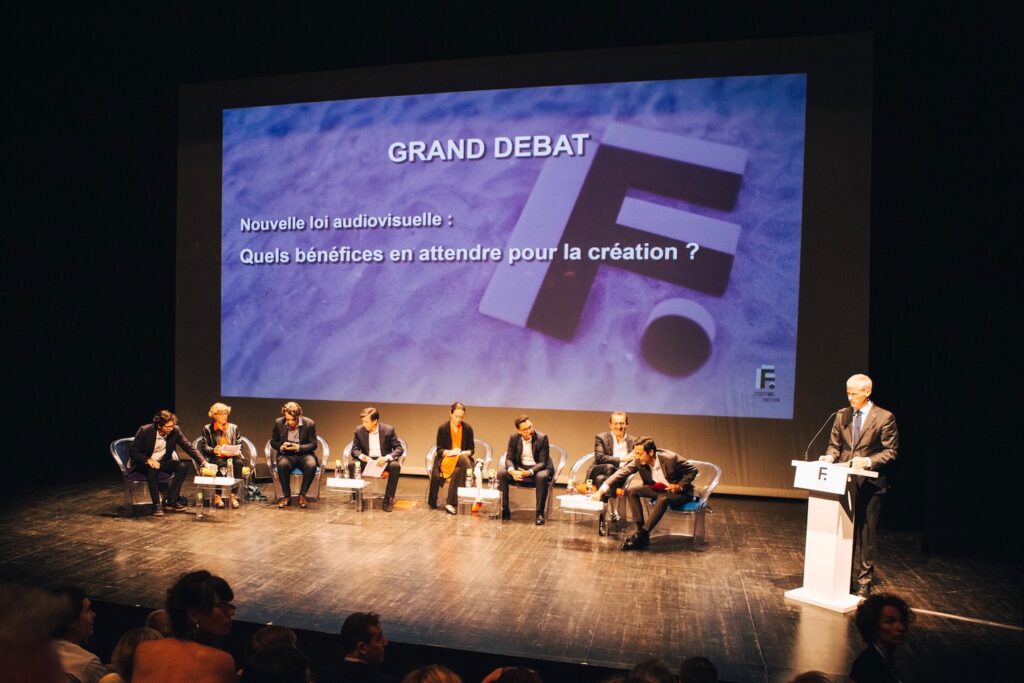
“There are serious asymmetries between players and this is weakening the development of the traditional ones,” said minister of culture Franck Riester when presenting the plans at the Grand Débat (Great Debate) during the La Rochelle TV Drama Festival that month. “It is our responsibility to modernise our regulations in order to bring the players who are not covered by our rules into the production funding system. But in a market undergoing digital revolution, where international competition is escalating, the answer must not be to simply adapt to the new constraints – we need to reinvent our model.”
In response to current globalisation and consolidation trends, the government wants local groups to grow into ‘French champions.’ As regards public broadcasters, it has announced that in 2021 it will create a holding company called France Media that will group together all public TV and radio broadcasters to strengthen the public sector, although it also confirmed its previously announced plans to shrink budgets and reduce the number of channels in line with the government’s overall wish to reduce public spending. Still going ahead is the closure of public children’s channel France 4 next year, despite protests from the animation industry.
France Media will include France Télévisions, Radio France and public archive company Ina, as well as international radio service RFI and news channel France 24. Arte and TV5 Monde will remain independent, as they are both international ventures involving other shareholders.
Private broadcasters, for their part, get their advertising rules relaxed significantly, including the introduction of a third ad break in 90-minutes- or-longer movies and TV movies, and localised and segmented ads. In addition, long-standing restrictions on movie advertising and how films are scheduled on TV, which were intended to protect cinema ticket sales and independent movies, are also relaxed.
As for production obligations, the government wants to introduce a “new funding framework” for French content, applying to both streamers and broadcasters, which has raised concerns among producers.
“The reform won’t be done without the [SVoD] platforms but together with them,” Riester explained. “Platforms do not represent a threat in themselves. They offer our creators huge opportunities in terms of creative freedom and worldwide reach. The threat is when they are not playing the game.”
He said that some of the SVoD practices, such as requiring all rights and not respecting the French ‘droit d’auteur’ (author’s rights), are very different to French practices and that the new regulations will look to limit them. In fact, Netflix signed an agreement with drama ‘authors’ (screenwriters and directors) organisation SACD about droits d’auteurs some time ago, but Amazon has not yet done the same.
“The new players need to have the same rules as traditional ones and contribute to [French funding body] CNC through similar taxes,” Riester said. The 2020 finance rules will stipulate platforms are required to contribute 5.15% of their French revenue to CNC (up from 2%), which is the same for broadcasters (down from 5.65%). Ultimately, when on-demand services are included in the system, producers working with them will be entitled to CNC funding. Like broadcasters, they will be controlled by regulator the CSA, which is to merge with anti-piracy authority Hadopi and extend its power to include digital players, under the new name Arcom.
The bill itself, which is set to be voted on in January, will only lay down general principles, complemented by more specific rules – for example, a State decree relaxing ad regulations will be introduced in 2020 and the production one will come into force in 2021.
As regards production obligations, in an effort to ensure all players are treated equally, the government is planning to introduce a minimum investment that will be the same for all, inviting producers and platforms to negotiate better deals.
It was revealed during La Rochelle Festival that the original plan was to get them to spend a minimum of 16% of all revenues generated in France on local production. This investment would have been split 50/50 between dependent and independent producers, with a very strict definition of ‘independent’ (no capital relationship, no coproduction or distribution mandate of any kind and no more than 18 months of rights).
This raised fears among producers’ unions, who were hoping for a higher minimum and are afraid traditional broadcasters that currently pay more would take the opportunity to renegotiate lower obligations, especially those regarding independent production, where the figure is reportedly between 70% and 88%.
Producers’ union USPA believes that the move risks reducing investment in independent production by traditional players by €200m, which is unlikely to be made up by the streamers. Production quotas in France cover movies and the so-called ‘oeuvres patrimoniales’ (drama, animation, docs or shows that have a long shelf life, as opposed to the more disposable entertainment and light factual).
They currently range from 15.7% (12.5% in oeuvres, 3.2% in movies) for TF1, as a diversified channel also airing unscripted, news and sports, to 33% (27% in movies, 6% in oeuvres) for OCS, as an all-movie and drama channel.
“Our aim is not to reduce broadcasters’ contribution to creation,” said Riester, without giving any guarantee on the independent split. Since then, the government has launched a consultation with all parties and aims to unveil the parameters of the production decree in January. It will have to confirm the 16% of revenues minimum investment level and the 50% independent split or more, as well as give a definition for what will qualify as independent production. Producers and traditional broadcasters have also been invited to renegotiate together their own specific rules by July next year.
Pressure on producers’ rights is intensifying thanks to traditional broadcasters’ digital developments and SVoD services’ habit of keeping all rights to themselves, what French broadcasters are limited to do by regulation. Canal+ and M6 have been lobbying recently, with M6 keen to buy prodcos if the regulations are relaxed. The broadcaster is in the mood for expansion, having recently bought Lagardère channels including Canal J, Tiji and Gulli, which will be the sole kids’ channel left on the DTT platform if France 4 disappears. It also plans to develop Gulli’s SVoD offer.
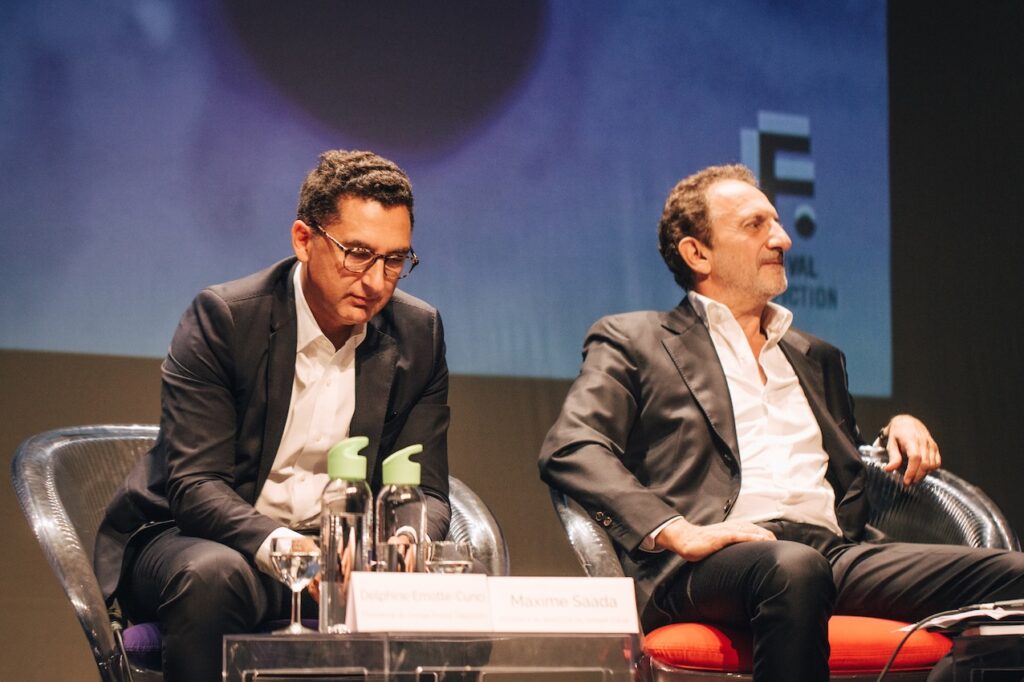
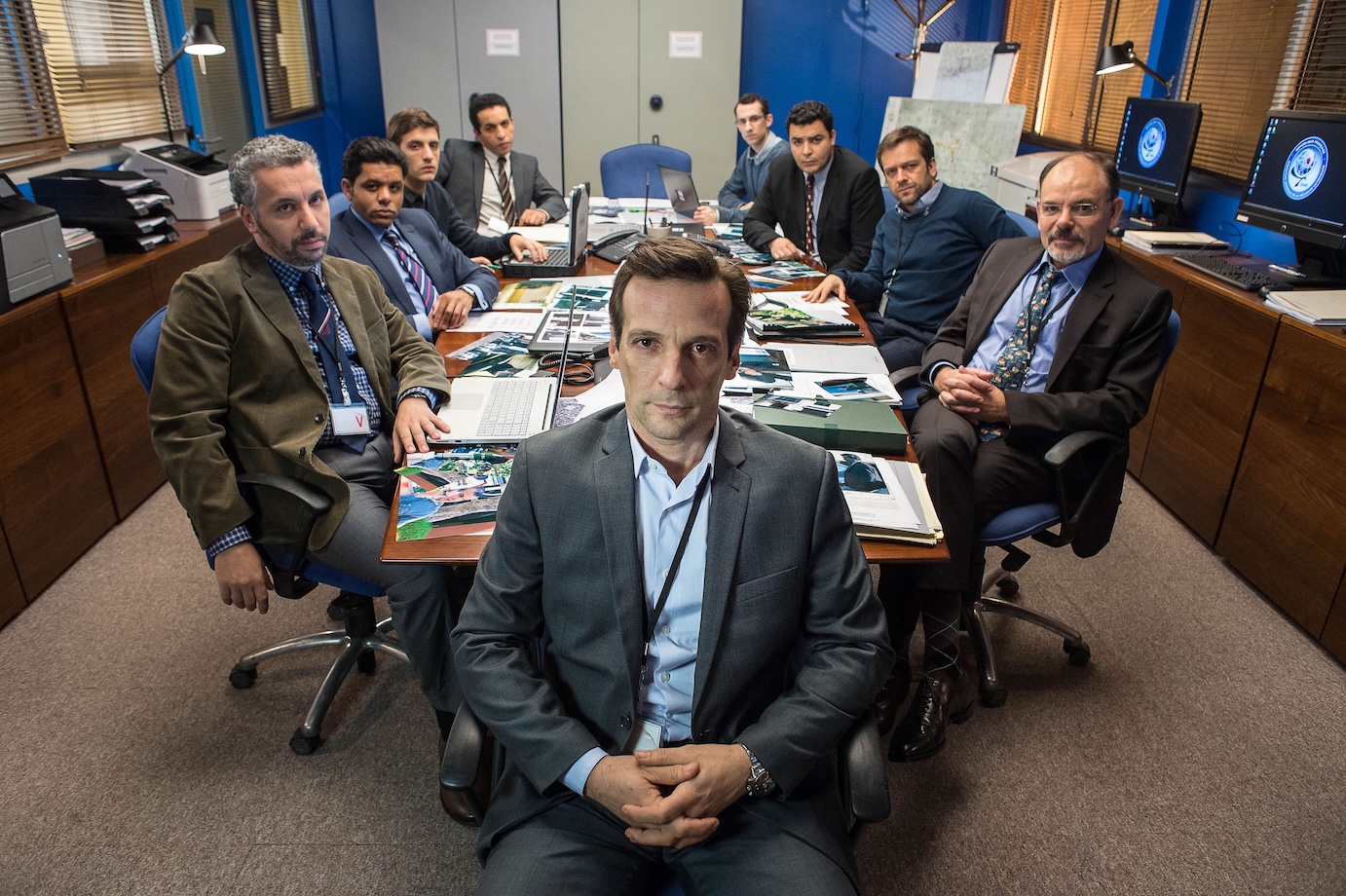
“After four years on the air, we had to renegotiate the SVoD rights to Le Bureau des Légendes – that does not work for us,” said Maxime Saada, CEO of Canal+, in La Rochelle. The pay TV group had to launch its SVoD platform, Canal+ Séries, without this flagship show because it did not own the rights, although this has since been sorted out.
“We need to find a system whereby we do not become mere facility companies,” said Thomas Anargyros, head of drama company Storia Television and president of USPA.
“And then there’s the rest of the world,” added Gilles Pélisson, chairman and CEO of TF1, which has already diversified into production with Newen. “We can see the US system is all about vertical integration; in Europe, it’s the opposite. So how can the French system evolve?
“I don’t believe in too strong vertical integration because it kills creativity. But there needs to be a balance, so we can get more revenues and control over production. 50/50 is perhaps a little too much too soon. But how do we protect French production and be able to have French champions?”
“Whatever the percentage, we will respect our agreement with producers,” said Delphine Ernotte, president of France Télévisions, who signed a new deal with producers following last year’s reform of the pubcaster. France Télévisions agreed to increase its digital efforts by developing its France.tv platform, which will offer more original content, and launching online kids offering Okoo to replace France 4 by the end of this year. Both sides agreed on VoD rights and windows, as well as the introduction of a holdback for SVoD rights and specific rules for online shows. The deal secured France Télévisions’ investment in production until 2022, despite the reduction in its total budget.
The French entertainment business has seen a good deal of disruption because of digital competition. The TV advertising market has been flat for several years, growth being driven by digital only. With Netflix now claiming six million subscribers, SVoD platforms somewhat affected primetime audience figures for broadcasters last season, accelerating changes in viewing habits and causing more fragmentation, although TF1 recovered with massive linear audience figures thanks to Fifa Women’s World Cup football, and broadcasters’ revenues were not hurt last year thanks to a recovering advertising market. For their part, September and October this year did not experience any further significant audience drop.
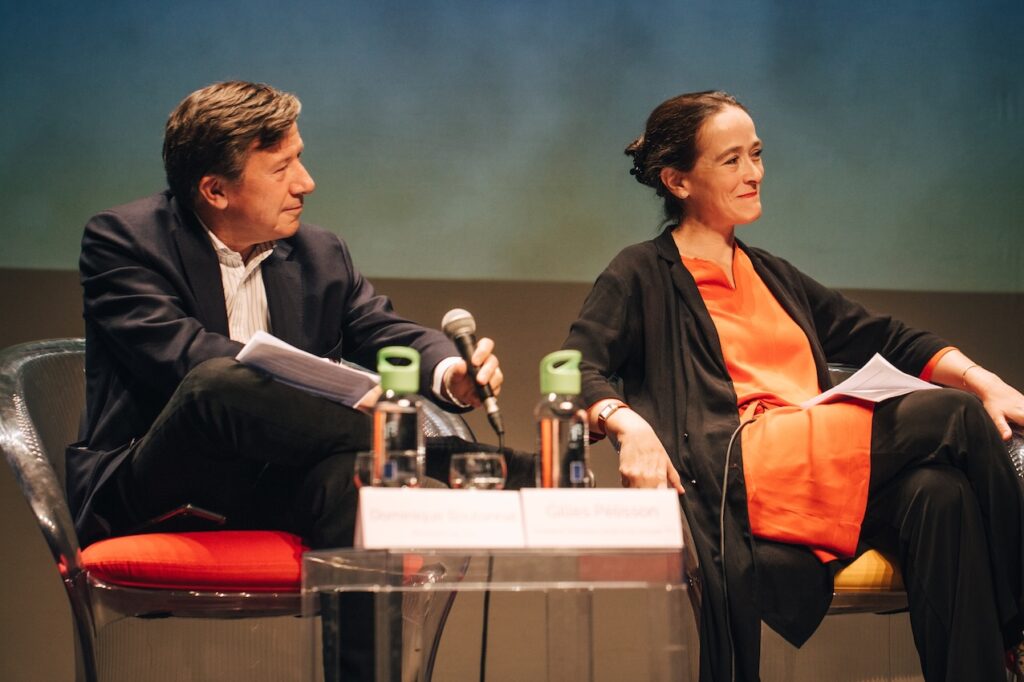
Broadcasters’ reactions to Netflix have differed. France Télévisions is a strong opponent of the streamer, having put together its Alliance to co-fund ambitious drama with European partners and signed agreements with producers’ unions for holdbacks. Meanwhile, TF1 is more open to partnering with the service.
“When we do [costume drama] Le Bazar de la Charité, on which we reached an agreement with Netflix, we are upping our ambitions, as the budget is over €2m per episode,” said Pélisson. “Netflix enables us to complete financing and brings a formidable world window that gives value to French content, and we can be proud of that.”
“With the current US SVoD situation, shows that we largely fund get a better exposure on Netflix than on our offering –that doesn’t make sense,” said Ernotte of France Télévisions. “We can consider partnerships if they are respectful.”
After having blamed Netflix for all its troubles, pay TV group Canal+ has now signed a distribution agreement with the streamer. Under pressure from competition, Canal+ scaled back its flagship channel’s operations and invested instead in its MyCanal on-demand technology to address new viewing habits. It has also developed its third-party distribution strategy by creating thematic packages that include its competitors. For example, Netflix has joined Canal+’s ‘ciné/série pack,’ which includes other film and series channels such as OCS.
It plans to again increase its investment in content, from eight to 10 drama series per year and then 12, in sync with the recent launch of its SVoD service Canal+ Séries. In La Rochelle, it premiered its new high-profile political and crime drama Les Sauvages, which – highlighting the changing viewing habits of the channel’s viewers – was streamed a record two million times in a week.
Meanwhile, France Télévisions, TF1 and M6 have just received the greenlight for their joint SVoD platform, Salto. Competition watchdog Autorité de la Concurrence claimed there was a risk that the parent broadcasters, thanks to their holdbacks, could retain the SVoD rights to the shows they commission for Salto – to the detriment of both competitors and rights-holders. As a result, they won’t be able to do that for over half of their content with holdbacks.
Salto must also have separate rights contracts and be independent, with its own management teams. TF1’s Pélisson was appointed chairman of the supervisory board for two years and Thomas Follin, who headed M6 digital development, joined the leadership. The service is intended to launch in the first quarter of next year using technology already developed by M6.
This article was published on October 30, 2019 in :
Update , August 2026 : Since this 2019 article, the French government—which has since changed its Culture Minister several times—had to resurect the daytime kids’ channel France 4 during COVID-19, as it was needed to broadcast educational content to children during the pandemic. Furthermore, it could not move forward with its project to create a holding company to regroup the various publicly funded broadcasters due to strong opposition, though it remains an active goal. Meanwhile, the broadcasters’ joint SVOD platform, Salto, ultimately collapsed. On the production side, producers won their case regarding the two-thirds independent production quota, which now also applies to streaming services. We can also say that the French government’s desire to see local champions emerge was successful: Banijay and Mediawan have become global giants, even if theireven if, through successive M&A deals, their original French ownership has been somewhat diluted.