

 par
par ARCHIVES : Articles by Marie-Agnès Bruneau Published in the International Press
Published in TBI (Television Business International),18th October 2022
Amazon Prime Video and Netflix have both enjoyed huge recent success with unscripted formats in France. Marie-Agnès Bruneau reports on what’s next and where opportunities lie.
France’s format market is in flux as new demand from local broadcasters and streamers fuels a new wave of unscripted programming across the country.
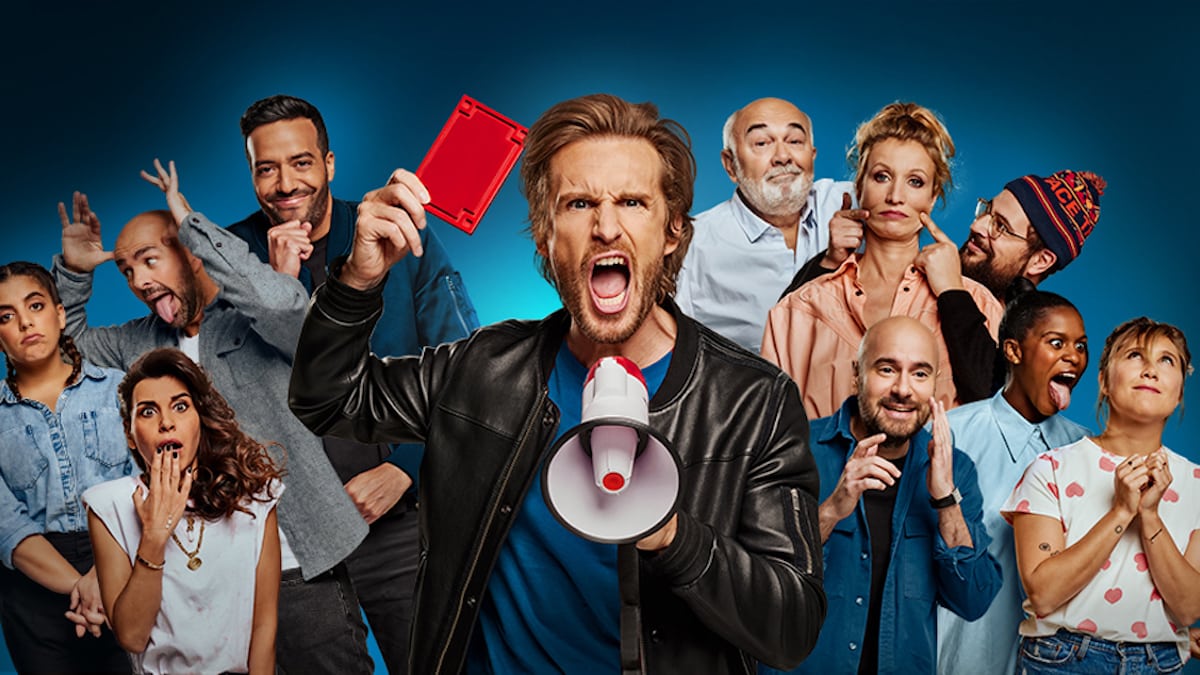
Both Amazon and Netflix have enjoyed recent success with format adaptations this spring, when the second season of comedy gameshow LOL became one of Prime Video’s most-watched series across all genres and origins.
Not to be outdone, Netflix had hip-hop talent competition Nouvelle École, or Rhythm + Flow France, which remained in its Top Ten in France for five weeks in a row. Both, of course, were then also renewed.
Cultural resonance
Part of the reason for Nouvelle École’s success lies in hip-hop’s deep roots in France and as Lucy Leveugle, Netflix’s director for creative strategy in EMEA, tells TBI, the show offered “an authentic story” that was “really relevant to [French] culture.”
French production company Black Dynamite, known more for its documentaries than its format adaptations, was chosen because of its connection to the hip-hop community and Leveugle says the result was “a reinvention” of the original US show that debuted in 2019.
It was, she adds, a series that developed its own personality, with new sets and backgrounds compared to the US version. “It’s an interpretation rather than an adaptation, so you get a local feel,” Leveugle explains, adding that it was introduced over three weeks rather than made available for bingeing all at once. “We do that sometimes – it’s a conversational show and we felt it was really important to build on that conversation.”
Leveugle says Nouvelle École is “part of a bigger regional strategy for non-fiction”, with more originals and adaptations in the works. “Subscribers, perhaps, are more used to documentaries, and we’ll do some more as well as more format and docusoaps, which can be really impactful.”
For Thomas Dubois, who heads Prime Video original production in France, the “great thing” about LOL was that its audience grew in the second season. “It became one of our greatest successes in terms of engagement,” he says.
Born as Documental in Japan, the Prime Video format was first adapted in Mexico, “then with our Italian, German and Spanish colleagues, we thought why not try adapt it ourselves,” Dubois tells TBI.
“Humour is something very domestic – we don’t all laugh in the same way at the same type of things,” he continues. The French version has a different length and includes its own format arcs, while much attention was put into the diversified casting of celebrities.
And although it is fast to shoot, with just one location, and based on one simple rule – to get the other person to laugh – Dubois says “it actually required quite a lot of work upfront, with the talents developing their sketches with the help of writers.”
Format hunting
Prime Video also renewed Celebrity Hunted, which had already been adapted in Italy, and which will develop more of a humorous tone in season two. “Another innovative format we are launching is Cosmic Love – astrology became a very popular topic during the lockdown,” he says.
Adapted from the US dating format, the French version will have more episodes and a host, reality star Nabilla, who already had her own docu-soap on Prime Video. The range underlines Amazon’s broad demands. “What matters is the idea and concept. We’d love to find the next LOL: a simple pitch, well- known faces, in a surprising situation,” he says.
For producers, such as Jean-Louis Blot, president of Banijay’s Endemol France and the company that produced LOL and Celebrity Hunted for Prime Video, the two shows are “a strong signal” of how quickly streamers have acquired the know-how in adapting international formats.

There may also be new opportunities from broadcasters via their own streamers, which are starting to dedicate some budget to production.
Leading is France.TV, which just had a hit with a local adaptation of Drag Race, a third-party format to which Endemol France had picked up the rights.
France Télévisions has already been producing streamer- first dramas to attract younger audiences and Blot says investment has also come in unscripted, notably with Drag Race. “They understood the potential and invested so we could produce a quality show, which became a marker on a society matter,” he continues. The show was broadcast on France 2 in a late-night slot following its online success and will gain a better strand for the second season.
Replicating global trends, the major terrestrial broadcasters have also been reviving well-known brands as the market becomes ever-more competitive with fragmenting primetime viewing. “Is it that it’s fragmented or perhaps primetime shows are getting more targeted?,” asks Blot. “Mainstream is still capable of driving big numbers.”
However, the recent re-launch of MasterChef met disappointing linear audience figures on France 2. Blot says that as the show was targeting younger viewers, the older audience moved away. Reffecting this, the show saw ratings rise considerably on catch-up.
One of Endemol France’s upcoming launches is the reboot of TF1’s former hit reality talent show Star Academy. “This format is perfectly suited to modern usages in its narrative and form, with its live feed, its daily show and its primetime and second part of the evening shows,” says Blot, underlining that reality works well on-demand. “It’s perfect for MyTF1 Max.”
Another reason why format franchises are being revived is because unscripted fare is gaining new linear primetime strands at the terrestrials. TF1, for instance, is scheduling shows on Tuesdays, with Koh Lanta and Masked Singer, while M6 is introducing additional unscripted strands to replace audience-dropping US series, which have no strand on the channel this fall.
“We’re coming off the back of more than a decade of US series supremacy,” says Blot. “Now they are disappearing from primetime and being replaced by unscripted, which is cost effective. There is much demand, although broadcasters remain somewhat risk-averse and because nothing happened in unscripted for 10 years, there’s a shortage of talent.”

Talking of risk-taking, M6 subsidiary Studio 89 enjoyed summer success with Les Traitres (The Traitors), adapted from Dutch format De Verraders. It led at launch and “also reached a 38% share among women under 50, a record for a new show since the channel was launched,” says Florence Duhayot, MD of Studio 89 (right).
Here too, much attention was put on casting, including celebrities of various ages. She is now looking for formats “that can bring audiences together, explore new grounds and create an event.”
“It’s a very disruptive psychological game and it required great courage to do it. Its look, its narrative were completely different,” she says.
Studio 89 also found success this summer with original creation, Qui Peut Nous Battre? (Who Can Beat Us?), marking its “best launch for an original show in two years,” Duhayot says. The show was developed by Studio 89 after it teamed with RTL Group’s development structure, LC Group (Matthias Scholten) and produced together with indie French TV.
Studio 89’s Top Chef and Mariés Au Premier Regard (Married At First Sight) continue to perform, and Duhayot says that despite the in flux of streamers, the strategy remains the same.
“Yes, there are more outlets but our job is still the same – to get millions watching us. When you see that De Verraders is going to be adapted by HBO Max in Spain, that The Mole, that we adapted in the past, was acquired by Netflix and that Dancing With The Stars is moving from ABC to Disney+, it shows we all look for extremely impactful shows that break new ground. And then from there, we need to produce it well.”
Netflix’ EMEA wishlist

« We are looking for shows in three categories : formats/unscripted; docu-soap/reality; and docuseries » says Lucy Leveugle (left), who joined Netflix from Channel 4 in the UK four years ago to develop non-fiction in the EMEA region together with local teams. She was recently elevated director of creative strategy for EMEA.
In docusoaps, the cast must « really stand out » and in docuseries the focus is on stories people know. She gives as examples South African docuseries Senzo: Murder of a Soccer Star and Norway’s Mister Good, Cop or Crook?. « everyone, there, knows these stories.
As for unscripted and reality, besides Nouvelle École in France, recent hits have included Young, Famous and African, which has reached the streamer’s top 10 in South Africa, Kenya and Nigeria over four consecutive weeks. Also renewed were Spanish docusoap I am Georgina and reality series Love Never Lies, « an interesting local format that we are considering adapting in other countries », she says.
Although Netflix is interested in developing formats, there is no systematic strategy because to be adapted, a format has to be relevant in the country, she points out. The streamer also, of course, like to retain IPs but has develop a model that sees creators getting a fee each time the IP is remade. It is « an already proven business model’ she says. Used for instance for Too Hot to handle. And risk remains of interest, although Leveugle adds that Too Hot to handle is already « quite edgy ». She adds ‘bold does not have to mean shocking – it can me exciting, new, moving a genre forward ».
This article was published in :

After 35 years, London-based trade publication TBI was closed in June 2024