
 par
par ARCHIVES : Articles by Marie-Agnès Bruneau Published in the International Press
Published in Realscreen, January 7, 2026
Fabrice Puchault is the head of the Society and Culture unit at Arte France. He leads, together with two deputies, a team of five commissioning editors, with Alexandre Marionneau in charge of international coproductions for the division.
While international production partnerships have long been part of Arte’s programming strategy, last year, the Franco-German pubcaster formalized its intent to expand into a major European content platform. Currently, Arte’s European broadcast partners include Suspilne Ukraine, Sweden’s SVT, LPM in Latvia, RTVE in Spain, Lithuania’s LRT, Film Fund Luxembourg, RTÉ in Ireland, RAI Com in Italy, ČT in Czech Republic, Austria’s ORF, Finland’s YLE, SRG SSR in Switzerland and RTBF in Belgium.
Here, Puchault discusses his current approach to commissioning documentaries, the evolution of his unit’s editorial mandate, and Arte’s expansion as a pan-European platform — a move that signals a deeper commitment to collaborating with European producers.
What is your unit’s remit?
Fabrice Puchault: Our unit covers investigative documentaries — which can range from the economy and politics to social issues — and contemporary history blended with geopolitics. For instance, we have a major coproduction underway about Israel and Palestine with Brook Lapping, a partner we work with regularly. We also just finished LVMH: The Empire [exploring the geopolitics of luxury via the Louis Vuitton group’s success story]. Additionally, we commission cultural documentaries with a focus on the world’s writers and their work, as well as films about societal issues.
In line with our core mission, we commission or coproduce the majority of our content — it’s difficult to count but roughly altogether 80 programs a year (both mini-series and one offs of various lengths, including about 20 digital-only). Our ‘Grands Formats’ feature-length documentaries can originate from anywhere; for instance, we regularly collaborate with [Cambodian documentary filmmaker] Rithy Panh. Our strand ‘La Lucarne’ [featuring content more in the “arthouse” vein] is quite unique, breaking away from traditional storytelling — it is a space where we experiment extensively, with stories from everywhere.
Some of our feature-length documentary films get a theatrical release after broadcast. This past year, that included Je N’avais Que Le Néant – Shoah Par Lanzmann, Soundtrack to a Coup d’Etat, and Imago, a documentary film from a Chechen director, Déni Oumar Pitsaev, initiated in Belgium, which was selected at the Cannes Film Festival’s Critics Week and won the Oeil d’Or Award. They come on top of the proper theatrical documentaries commissioned by Arte Cinema in liaison with us.
We must give people the means to understand the world, and reassure them. Because when you understand something, you feel better.
How has the editorial focus of your unit evolved, along with viewership trends and societal changes?
Puchault: The unit has two fundamentals: the first being, the facts.
“Just the facts” is the core of our focus, alongside the complexity of the world. This complexity is no longer merely national, but always international… We must give people the means to understand the world, and reassure them. Because when you understand something, you feel better.
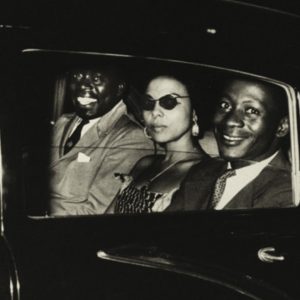
We put this into practice through documentaries like Generation Ukraine (12 films over several years from Ukrainian crews and directors) or Soundtrack To A Coup d’Etat (pictured) and in our diverse investigative work, such as the recent PBS coproduction, Trump’s Power and the Rule of Law. No one is an island, and no narrative can afford to be strictly national. Even with our films about society, we always seek to reflect their universality.
Such is the case with Ceci Est Mon Corps (This Is My Body), a documentary about a young man’s quest for truth as a victim of pedophilia, through a journey, sometimes raw, that leads all the way to the trial.
We aim to build trust with our viewers and touch them — both in terms of reach and resonance. To achieve these goals, we truly take the time to make our films.
Dramaturgy and emotion are essential to help viewers share experiences that are not their own — yet without ever being brutalizing. We maintain an inclusive editorial line, aiming to pay attention to minorities and to a world that is not organized solely by brutality. Values such as humanism and exchange are currently under attack from all sides. We are a media outlet in resistance.
Arte recently announced plans to expand as a European platform, Can you tell us more?
Puchault: We no longer consider ourselves a Franco-German cultural channel; we are a European cultural platform. We have 13 partnership agreements with European public broadcasters, and we are very proud to have reached one with Ukraine’s public broadcaster [Suspilne]. This was a deliberate, voluntary decision; even though Ukraine is not yet part of the EU, it is its destiny. Our European platform transmits in seven different languages, with content curated specifically for each.
We will add one or two more languages this year, with the goal of covering all 27 [countries in the EU-YES] in about three years. We already reach 70% of Europeans, making us the only homegrown European streaming platform — in contrast to the others, which are American.
In each of these countries, we are developing an omni-distribution strategy, including some YouTube and other social networks channels, as well as branded corners on other streaming platforms where our brand is respected (for instance, in France, Arte.tv is available on TF1+ and france.tv).
What does this expansion mean in terms of coproduction strategy?
Puchault: Our strategy is based on several pillars. The first of these is talent scouting: we maintain permanent relationships with our European partners who give us feedback, as well as with creative communities and independent producers at major markets and festivals. The second is an eclecticism of forms. Soundtrack to a Coup d’Etat is much different in its form from The Oligarchs: Putin’s Gang, Inside Gaza, or the two-part Zelensky, for which we were granted one of his longest interviews, and in feature documentaries, every film is unique.
We were already coproducing many projects from Europe — in fact, about 80% of our international coproductions are European. Now, this is becoming a formal strategy. We are planning the next steps in our European project; for instance, we are currently considering establishing a physical presence, such as offices, in our partner countries. When you speak the language, it triggers something — a door opens. This way, more European producers can come directly to us.
You also have a partnership with PBS in the U.S. Could you tell us more about it?
Puchault: We work a lot with PBS, including WNET, Studio POV, Frontline, WGBH… Besides Trump’s Power and the Rule of Law, we also recently acquired The American Revolution [the latest from Ken Burns and his team at Florentine Films]. There are not many international broadcasters that fit our editorial mandate; PBS is one of them.
In addition to that, we have a co-development agreement. We don’t have any big deal that would bind the parties; we don’t have the scale for deals like that. We see each other regularly — the last time was in Paris recently — to exchange ideas. We are currently working on a couple of coproductions that that I cannot yet unveil.
(Photos: Arte)
